

The Ultimate Destination Wedding Planning Checklist
Disclosure: Some of the links in this post are affiliate links. This means if you click on the link and purchase an item, I will receive an affiliate commission at no extra cost to you.
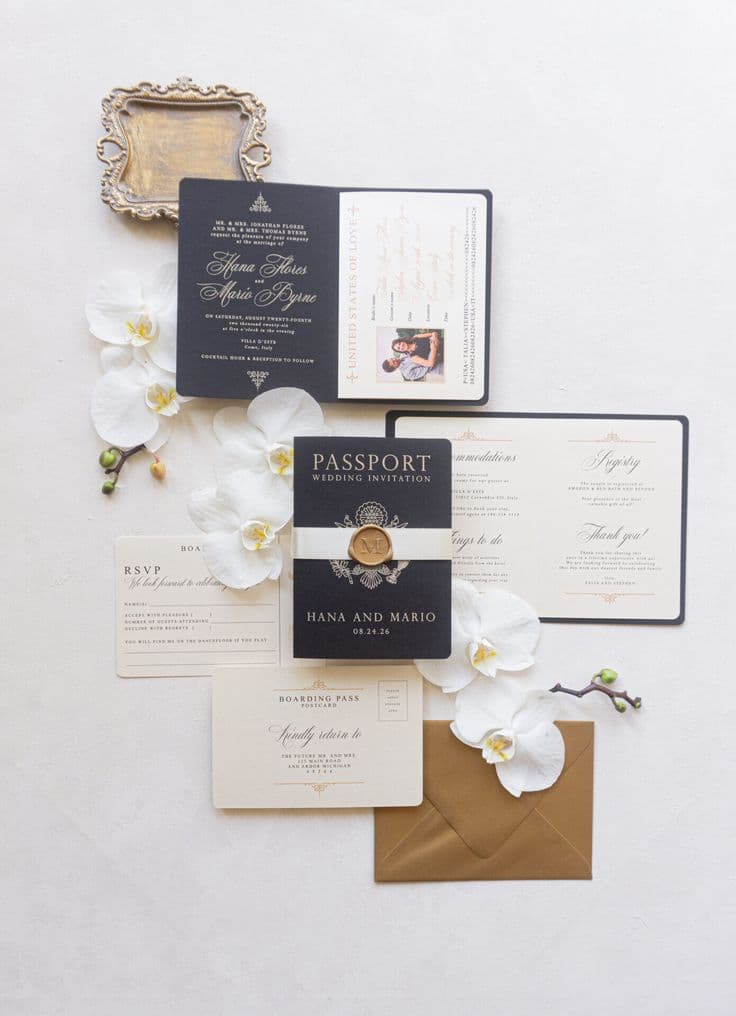
Image Credit: Pinterest
Planning a wedding down the road is hard enough. Planning one across an ocean, a time zone, and a legal system you’ve never dealt with is a different job entirely. One minute you’re picturing a sunset toast on a hillside. The next you’re refreshing your inbox because a vendor hasn’t answered in three weeks.
You’re not just planning a party. You’re coordinating a multi-day trip for dozens of people you love, most of whom have opinions. Skip the structure and things slip through: passports expire, budgets balloon, legal paperwork gets missed at the worst possible time.
This is the destination wedding planning checklist we wish every couple had on day one. It tells you just what to lock down and when.
Why a Destination Wedding Needs Its Own Checklist
A standard wedding checklist assumes your guests live nearby and your vendors speak your language on your timeline. None of that holds once you cross a border. Guests need to request time off work a year out. Vendors abroad often run on a slower reply cadence than you’re used to, and that’s not a red flag, it’s just a different rhythm. A generic checklist treats your wedding like a local dinner party. A destination-specific one forces you to handle passports, currency swings, and import rules for decor before you’ve even picked florals. That’s exactly why the timeline in this checklist front-loads the decisions that are hardest to reverse: venue, legal paperwork, and your core vendor team. Everything else has more room to flex.

Image Credit: Pinterest
If you haven’t settled on a country yet, start with the ultimate guide to planning a destination wedding before this checklist, since a lot of these steps depend on where you land.
Phase 1: The Money Conversation
Before you fall for an overwater bungalow, talk numbers. International weddings hit your budget differently than local ones. You’re not just covering food and flowers, you’re absorbing exchange rate swings, wire transfer fees, and sometimes covering flights for a parent or two. Ask vendors early whether their quote is locked in your currency or theirs, and if it’s theirs, build in some cushion for movement. Wire transfer fees add up too, especially if you’re paying multiple vendors individually rather than through one coordinator who consolidates payments.
The biggest mistake we see is couples ignoring the hidden local costs. Build a 15% buffer into your budget before anything else.
| Budget Category | Typical Allocation | Hidden Catch |
|---|---|---|
| Venue and catering | 45-50% | Local taxes and service fees can add up to 30% extra |
| Travel and lodging | 10-15% | Flight price spikes and seasonal room minimums |
| Local vendors | 20-25% | Equipment rental fees if the venue is remote |
| Permits and legalities | 2-5% | Translation and notarization fees |

Image Credit: Pinterest
Open a card with zero foreign transaction fees specifically for wedding spending. The points alone can cover your honeymoon flights. For a deeper dive on where budgets usually go sideways, the hidden costs of destination weddings nobody warns you about is worth a read before you finalize anything.
Phase 2: Picking Your Location
Choosing where matters less than choosing realistically. A remote island sounds romantic until your grandmother needs three flights and a ferry to get there.
Check direct flight routes from the airports your guests will actually use. Look at the local climate for your date, hurricane season in the Caribbean or an unexpected heatwave in Europe can derail an outdoor ceremony fast. Check the local calendar too. National holidays mean closed shops, booked-up vendors, and spiking flight prices.
Need somewhere to start? Our 50 dream destination wedding locations around the world breaks down options by vibe and logistics.
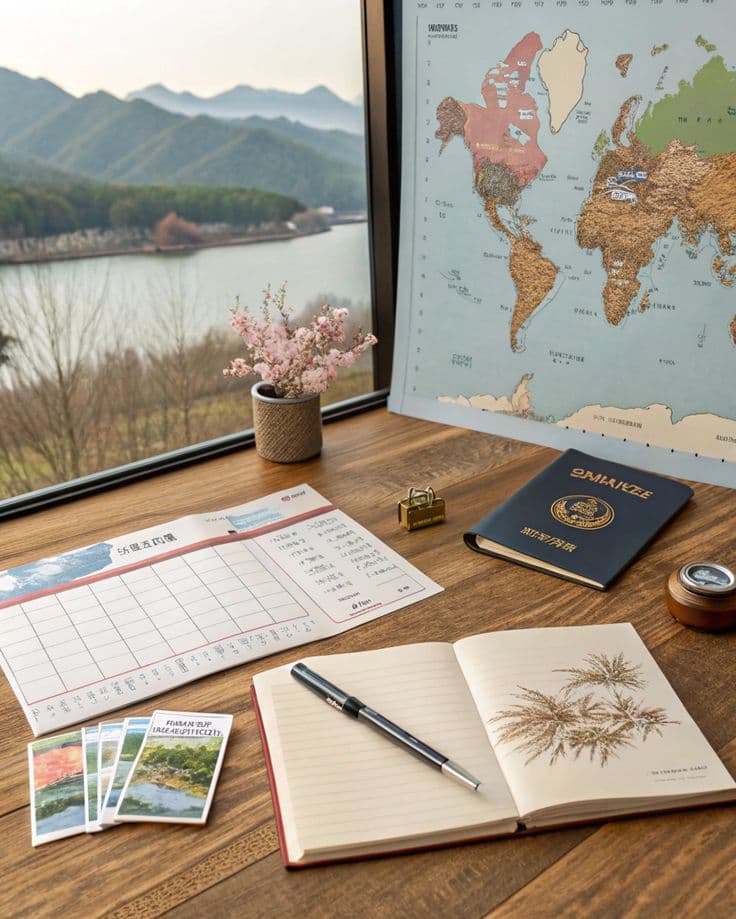
Image Credit: Pinterest
Phase 3: The Legal Question
This is where most couples get stuck. Every country sets its own marriage rules. Some require blood tests. Others require you to physically be in the country for several days before you can legally marry there.
You’ve got two real paths:
Fully legal on location. You handle every stamp, translation, and official document abroad. This takes months of planning and isn’t for the faint of heart.
Symbolic ceremony. You sign the actual paperwork quietly at your local courthouse before you fly out, then treat the destination event as purely celebratory. This wipes out roughly 90% of the legal headache. Nobody at your beach ceremony will know or care that the real paperwork got signed in your sweatpants back home.
Whichever path you choose, get it confirmed by the actual embassy or consulate of the country you’re marrying in, not a travel forum or a vendor’s best guess. Requirements change, sometimes with little notice, and the couple who assumes last year’s rules still apply is the couple scrambling at the courthouse two days before the ceremony. If either of you has been married before, budget extra time for divorce decrees or death certificates to be translated and notarized, since most countries want that documentation too.
For the specifics by country, see legal requirements for destination weddings by country.
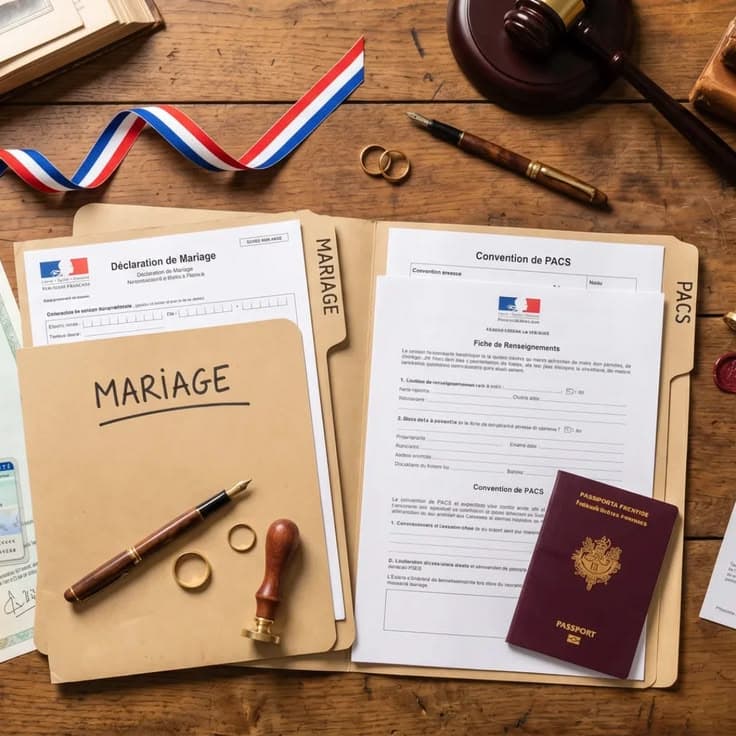
Image Credit: Pinterest
12 to 16 Months Before Your Wedding: The Foundation
This is where ideas turn into commitments. Wait too long here and you’ll face limited venue availability and higher pricing across the board.
Set your guest count range. Your headcount drives everything else, venue capacity, catering minimums, room block size.
Lock the venue and date. Put down your deposit and get noise ordinances, rain backup space, and vendor exclusivity in writing.
Hire a specialized coordinator. Someone who speaks the local language and knows local suppliers isn’t optional, it’s the difference between a smooth week and a stressful one.
Check passport expirations. Yours need to be valid at least six months past your return date. Remind your wedding party too.

Image Credit: Pinterest
9 to 11 Months: Locking the Team
With your venue set, book the professionals who only take one wedding a day. These fill up fast during peak travel season.
Book your photographer and videographer first. Flying them out? Clarify who’s covering flights, lodging, and meals before you sign anything. Sourcing locally? Skip the curated Instagram feed and ask for full gallery reviews from past international clients.
This is also when your wedding website should go live. Airport codes, hotel recommendations, and dress code guidance for the local terrain all belong there.

Image Credit: Pinterest
6 to 8 Months: Guest Logistics
Now the focus shifts to your guests’ experience. Secure a room block at a few different price points near your venue, not just the most expensive option. Once that’s locked, send your Save-the-Dates with a direct link to your wedding website so people can book flights while prices are still reasonable.
Don’t corner your guests into one ultra-expensive resort. Offer at least two lodging tiers so the trip stays financially realistic for everyone on your list.

Image Credit: Pinterest
3 to 5 Months: Invitations and Design
Travel takes planning, so your deadlines move earlier than they would for a local wedding. Mail your formal invitations now, with an RSVP deadline eight to ten weeks out. That buffer gives you room to finalize headcounts and seating without last-minute chaos.
This is also when to lock your florals and mood board. Skip imported peonies for a tropical ceremony, they’ll wilt in five minutes and blow your budget. Lean into what actually grows there.

Image Credit: Pinterest
1 to 2 Months: Final Details
The big decisions are made. Now it’s refinement.
Schedule your final attire fittings with the destination’s climate in mind. Heavy satin and three-piece wool suits do not hold up in humidity. Finalize your day-of timeline with your coordinator, including the exact sunset time if you’re doing a beach ceremony, so your photographer isn’t racing the light. Chase down outstanding RSVPs and lock your seating chart.

Image Credit: Pinterest
The Final Week: Landing and Staying Sane
Your job now is switching from project manager back to person getting married.
Arrive three to four days before your guests. That buffer covers jet lag, a final venue walkthrough, and a real, in-person meeting with your on-site coordinator. Book hair and makeup trials for the day after you land so you can see how local humidity affects the products before it matters.
Delegate whatever’s left. Welcome bags for guest rooms can go to the hotel concierge or a trusted family member. Your only job this week is staying hydrated, resting, and showing up.
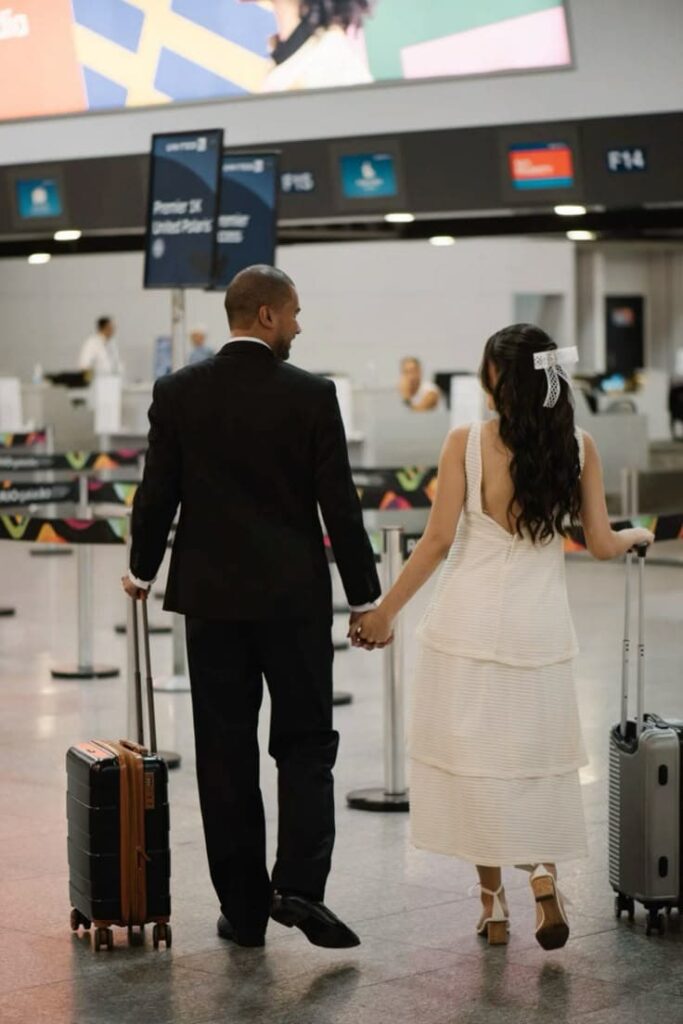
Image Credit: Pinterest
Local Vendors or Flown-In Ones
This question comes up for every couple. There’s no universally right answer, but the trade-offs are clear.
Local vendors know the venue, have existing relationships with local authorities, and cost nothing to fly in. The catch is slower communication and occasional style mismatches with your vision.
Flown-in vendors give you full creative alignment and the ability to do trials before you travel. You’re covering their flights, hotel, meals, and gear.
A hybrid approach works well for most couples: fly in your highest-priority vision vendor, usually your photographer, and hire locally for catering, entertainment, and florals.
Making the Trip Worth It for Your Guests
Your guests are spending real time and money to watch you say your vows. A welcome party or morning-after brunch acknowledges that. Since everyone’s already traveling, these bookend events give you calmer time together outside the reception rush.
Post a curated local guide on your website too, favorite coffee shops, safe transportation apps, a few must-see spots, so the trip feels like a real vacation between events. Our 25 wedding welcome bag ideas has plenty of inspiration if you want to go further.

Image Credit: Pinterest
Packing: What Never Goes in Checked Luggage
Be blunt with yourself here: never check your wedding attire or legal documents. If the airline loses your suitcase, you can buy new sandals at the resort. You cannot easily replace a custom dress or a certified marriage license abroad.
Carry-on: wedding attire in a garment bag, rings, passports, visas, birth certificates, medication, signed vendor contracts.
Checked: wedding shoes, undergarments, decor extras, favors, welcome bag contents, your regular vacation wardrobe.
Most airlines will happily hang your garment bag in a closet if you mention it’s a wedding dress, just ask politely at boarding. For more on this, 10 passport mistakes that can delay your wedding and our guest packing checklist for destination weddings cover the details worth double-checking before you fly.
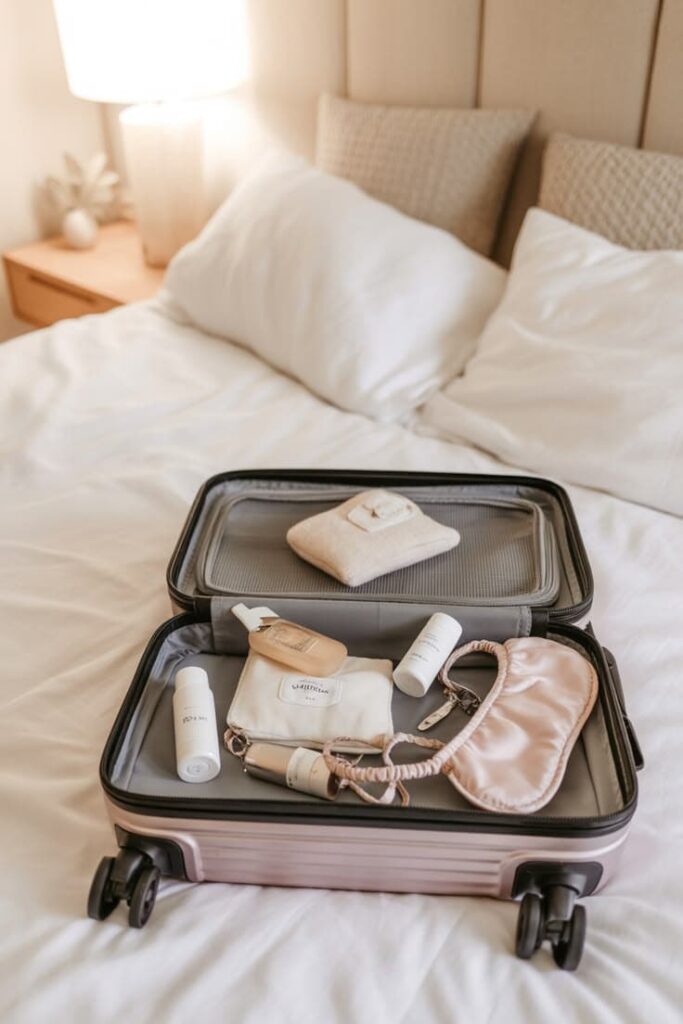
Image Credit: Pinterest
Common Questions Couples Ask Us
What if my vendor doesn’t speak English? This comes up more than you’d think, and it’s rarely the problem couples expect. A good local coordinator acts as your translator for contracts and day-of communication, so you’re not relying on a translation app for anything that matters legally or financially. For casual back-and-forth, a translation app works fine. For contracts, deposits, and anything with a signature on it, insist on a version in a language you’re fully comfortable reading.
Do I need a wedding planner if I’m not fluent in the local language? Not strictly, but it makes everything faster and lowers the odds of a miscommunication turning into an expensive mistake. If budget is tight, some couples hire a coordinator just for the final week rather than the whole planning process, which still covers the highest-risk stretch without the full price tag.
How many guests actually show up to a destination wedding? Plan for roughly 50 to 70% of your invited list to accept, lower than a local wedding, since travel, cost, and time off work all factor into someone’s decision. Don’t build your venue capacity or catering minimum around your full invite list, build it around a realistic accepted count, and confirm with your venue how late you can adjust numbers.
Should I still do a registry? Most couples doing a destination wedding either skip the registry entirely or set up a honeymoon fund instead, since guests are already covering flights and hotels. If you do want physical gifts, keep the list small and mention it makes practical sense given the travel cost.
What happens if a guest gets sick or injured abroad? Encourage every guest to look into travel insurance before they book, and do it yourself too. Research your destination’s nearest hospital or clinic in advance and keep that information on your wedding website, it’s a small addition that gives everyone peace of mind, including you.
Your Quick-Reference Summary
- 12 to 16 months before: Set your budget, guest count, venue, and coordinator.
- 9 to 11 months before: Launch your website, book your photographer, finalize room blocks.
- 6 to 8 months before: Send Save-the-Dates, order attire.
- 3 to 5 months before: Mail invitations, finalize design and menu.
- 1 to 2 months before: Complete fittings, chase RSVPs, lock the day-of timeline.
- Final week: Land early, do your beauty trials, walk the venue, celebrate







4 Comments